How to bid electrical jobs

Electrical service bids from a $75 to $200 diagnostic, with hourly at $75 to $140 per electrician. A dedicated circuit runs $250 to $650, a 200A panel upgrade $1,800 to $4,500, and a Level 2 EV charger $600 to $2,200.
Build a price book, not an hourly quote
Residential electrical is highly repeatable. You install the same dedicated circuit, swap the same devices and change the same panels, over and over.
That means the right way to bid is a flat-rate book:
(Typical hours × loaded hourly cost) + materials + margin = book price for that task.
A dedicated 20A garage circuit, 40ft run, panel has a spare slot:
- 3.5 hours × $58 loaded cost = $203
- Materials: 12/2 NM-B, breaker, box, receptacle = $62
- Target: labour at 45% of price → $203 ÷ 0.45 = $451
- Add materials with markup: $62 × 1.3 = $81
- Book price: $530 — inside the $250–$650 band, toward the upper half because of the run length.
Do that once for your thirty most common tasks and bidding becomes selecting. It also means two electricians quote the same job identically, which matters the first time a customer rings for a second opinion from your own company.
Price a electrical job
Your numbers, the formula above. Nothing is sent anywhere — this runs in your browser.
$420 base (4 hours × $105)
This is a starting number, not a bid. Walk the property before you send it.
Price the discoveries in advance
Panel work is where electrical bids get renegotiated on somebody’s driveway. Avoid it by pricing the likely findings before you open anything:
- Service mast replacement — $X
- Meter base replacement — $X
- Service lateral upgrade — $X (plus utility coordination)
- Aluminium-to-copper pigtailing, per device — $X
- Drywall repair beyond rough patch, per opening — $X
None of this makes you look uncertain. It makes you look like somebody who has done it before.
Sell the marginal work
Electrical has unusually good marginal economics. Adding a circuit while the panel is open and the crew is on site costs a fraction of a separate visit — and customers know it, which makes them receptive.
Put surge protection, an extra dedicated circuit, an outdoor receptacle or a garage subpanel on the bid as tickable options. It is the easiest way to raise average job size in this trade.
The mistakes
Quoting hours to a homeowner. They do not know if six hours is reasonable. A flat price they can accept or decline is easier for both of you.
Free diagnosis. You are doing the hardest part of the job for nothing.
Bidding off wage, not loaded cost. Van, tools, licence, insurance, unbillable travel and overhead all have to be in the rate.
No discovery pricing on panel work. Guarantees at least one awkward conversation per month.
Forgetting permit and inspection. Show them as their own line so your bid is comparable to a competitor who omitted them.
Keeping several electricians on the same numbers
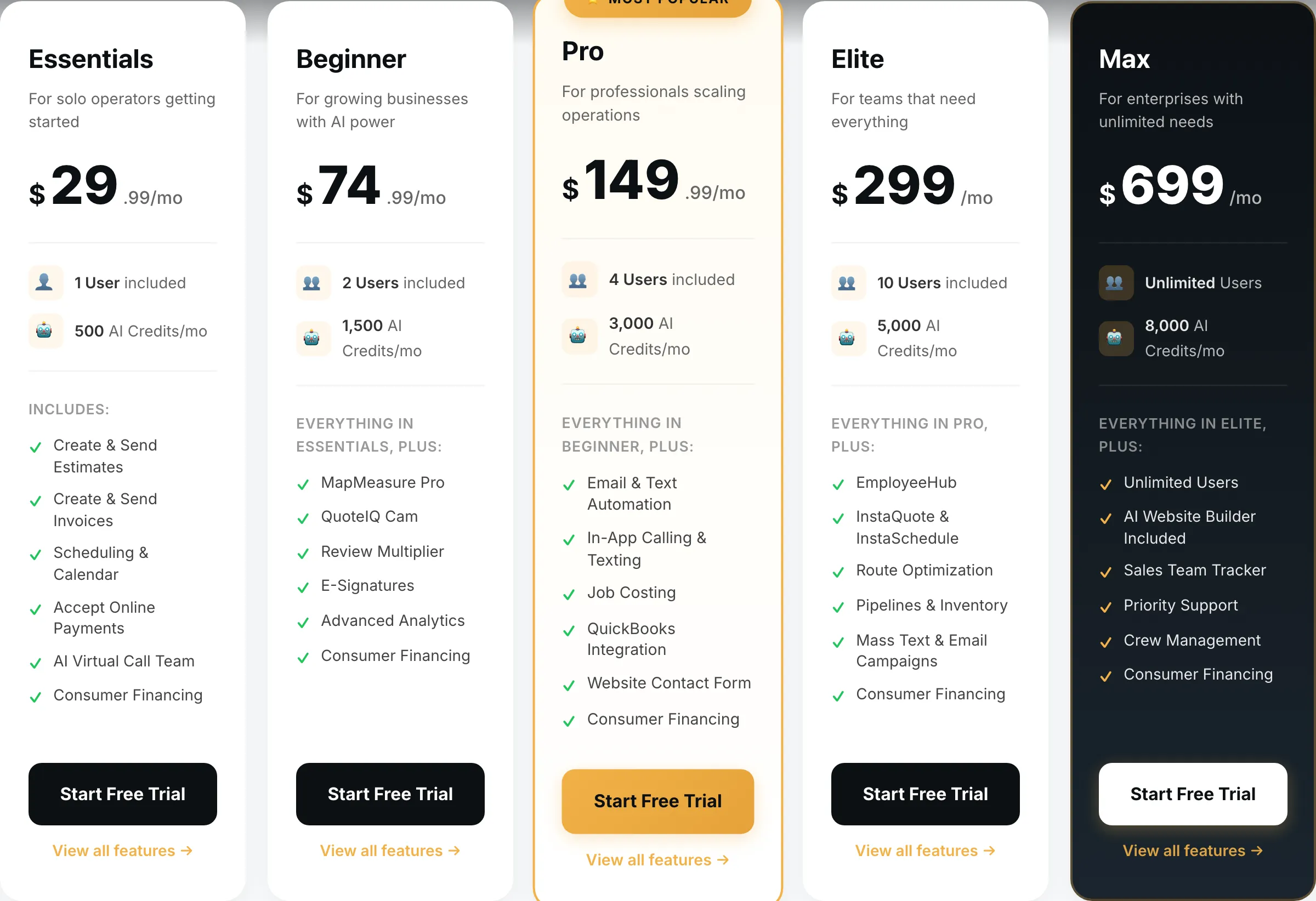
Housecall Pro includes a flat-rate price book from Essentials at $189/mo for five seats, which is the tool this whole page describes. Jobber at $49/mo plus $29 per seat handles saved line items, and Grow at $199 adds the optional line items for selling the marginal work. QuoteIQ at $29.99/mo includes consumer financing on every tier, which closes panel upgrades.
Questions operators actually ask
How do I bid electrical jobs?
For residential service, bid from a flat-rate price book built off your hourly cost, not by quoting hours. Price each common task once — a dedicated circuit, a device swap, a panel change — and quote by selecting. Reserve hourly for genuine unknowns like troubleshooting.
What hourly rate should an electrician charge?
$75 to $140 per electrician depending on market and licence level. That is the charge rate, not your cost — van, tools, insurance, licence, unbillable travel and overhead all come out of it before you do.
Should I charge a diagnostic fee?
Yes, $75 to $200, credited against the repair if they proceed. Finding the fault is the skilled part of electrical service and the part most likely to go unpaid if it is not its own line.
How do I bid a panel upgrade without getting caught out?
Price the known work, then list the common discoveries with their own prices — service mast, meter base, service lateral, drywall repair, aluminium pigtailing. You cannot predict which you will hit, but you can price all of them in advance so none is a renegotiation.
Flat rate or time and materials?
Flat rate for anything you have done ten times, because it removes the customer's risk and rewards you for being fast. Time and materials only for troubleshooting and genuinely unscoped work — and say which each line is.