Handyman estimating software: quoting speed is the whole thing

This is not a takeoff category
Worth stating, because much of the “estimating software” market is something else entirely. On HVAC, plumbing, electrical and drywall, estimating software means commercial takeoff — loading drawings and measuring off plans to produce a bid. That is a different product category from field service software, sold to commercial contractors bidding buildings.
Handyman work has no drawings. Estimating here means one thing: turning a lot of small jobs into quotes, fast and consistently. That is a field service software problem, and the tools below are the answer.
The economics of handyman quoting
You quote far more often than most trades and win a smaller fraction. Fifteen quotes to win six is normal. That makes three things decisive:
Speed. A quote sent from the driveway beats one sent that evening.
A saved library. You do the same twenty jobs repeatedly. Price them once.
Follow-ups. Most lost quotes are not rejected, they go quiet. Automatic chasing recovers a real share of them.
| Tool | Starts at | Users included | Best for | Verdict |
|---|---|---|---|---|
| QuoteIQ | $29.99/mo | 1 | Solo handymen | Cheapest; fast kerbside quoting |
| Jobber | $49/mo | 1 | One to four people | Best presentation + automated follow-ups |
| Housecall Pro | $79/mo | 1 | Five or more | Flat-rate price book, five seats |
| ServiceTitan | Quote only | Unlimited | Large service operations | Quote-only, oversized |
Jobber — best for quoting volume
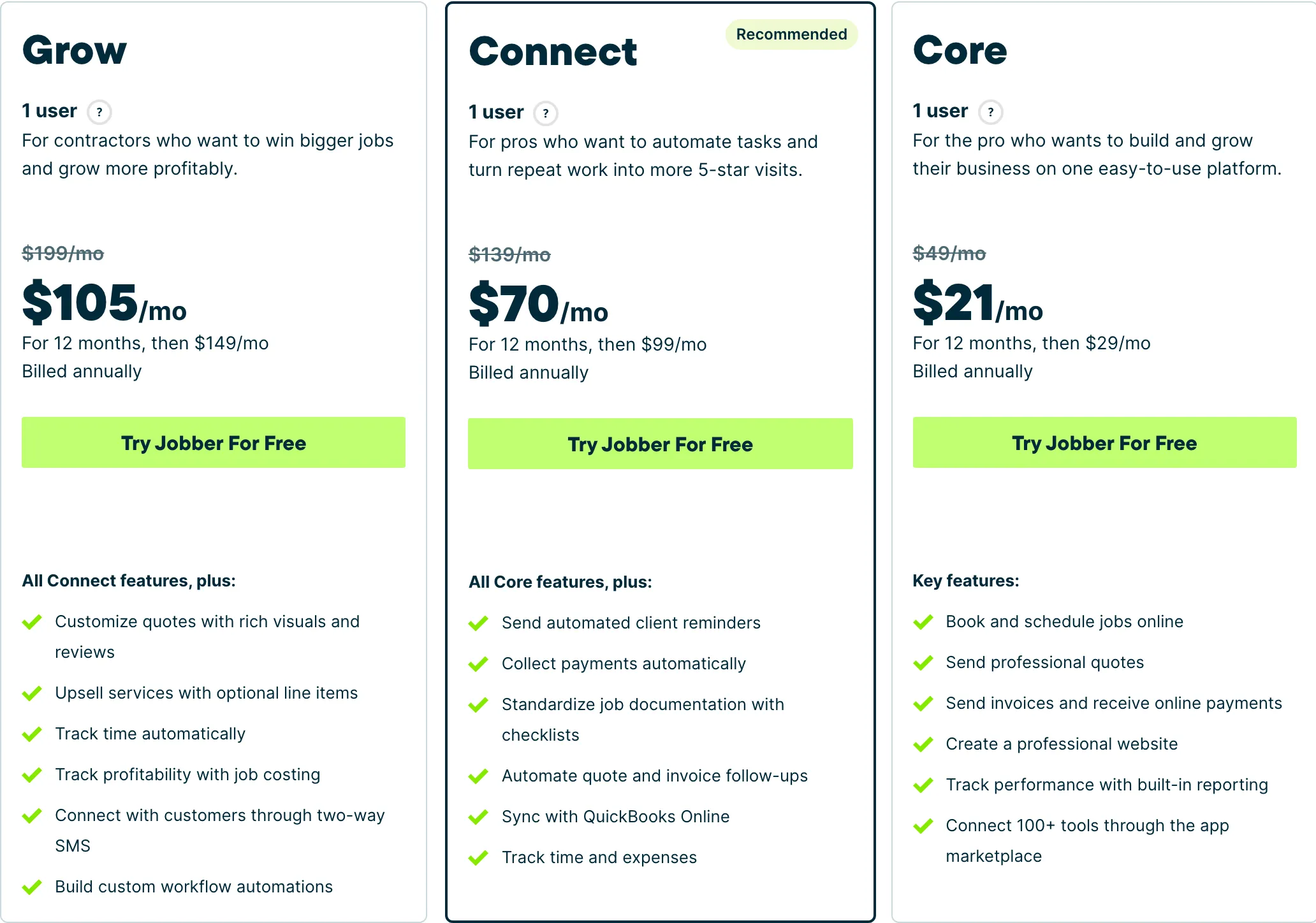
$49/mo · One to four peopleThe default field service platform for small home service businesses, and the one most operators compare everything else against.
Saved line items make a quote four taps, and the document the customer opens looks like a company sent it rather than a man with a van.
The feature that pays for itself here is automated quote follow-ups on Connect at $139/mo. At fifteen quotes a week, recovering even one extra job a month covers the upgrade several times over.
Core is $49/mo plus $29 per seat.
What it does well
- The most polished product in the category. Onboarding is fast and the mobile app is the one crews complain about least.
- Client-facing experience — booking page, quote approvals, payment — is a step above everything cheaper.
- Deepest integration list, so it fits whatever you already run the books in.
What it does badly
- The advertised entry price is one user. Seats are $29/mo each on every tier, so a three-person crew on Core is $107/mo, not $49.
- Automation that most operators consider essential — reminders, follow-ups — is Connect and up, a 2.8x jump from Core.
- Prepaid annual pricing is what the marketing quotes; the no-commitment monthly number is meaningfully higher.
Who it fits: One person to a mid-size crew. The Core tier is genuinely usable solo; the useful automation starts at Connect.
QuoteIQ — cheapest and fast
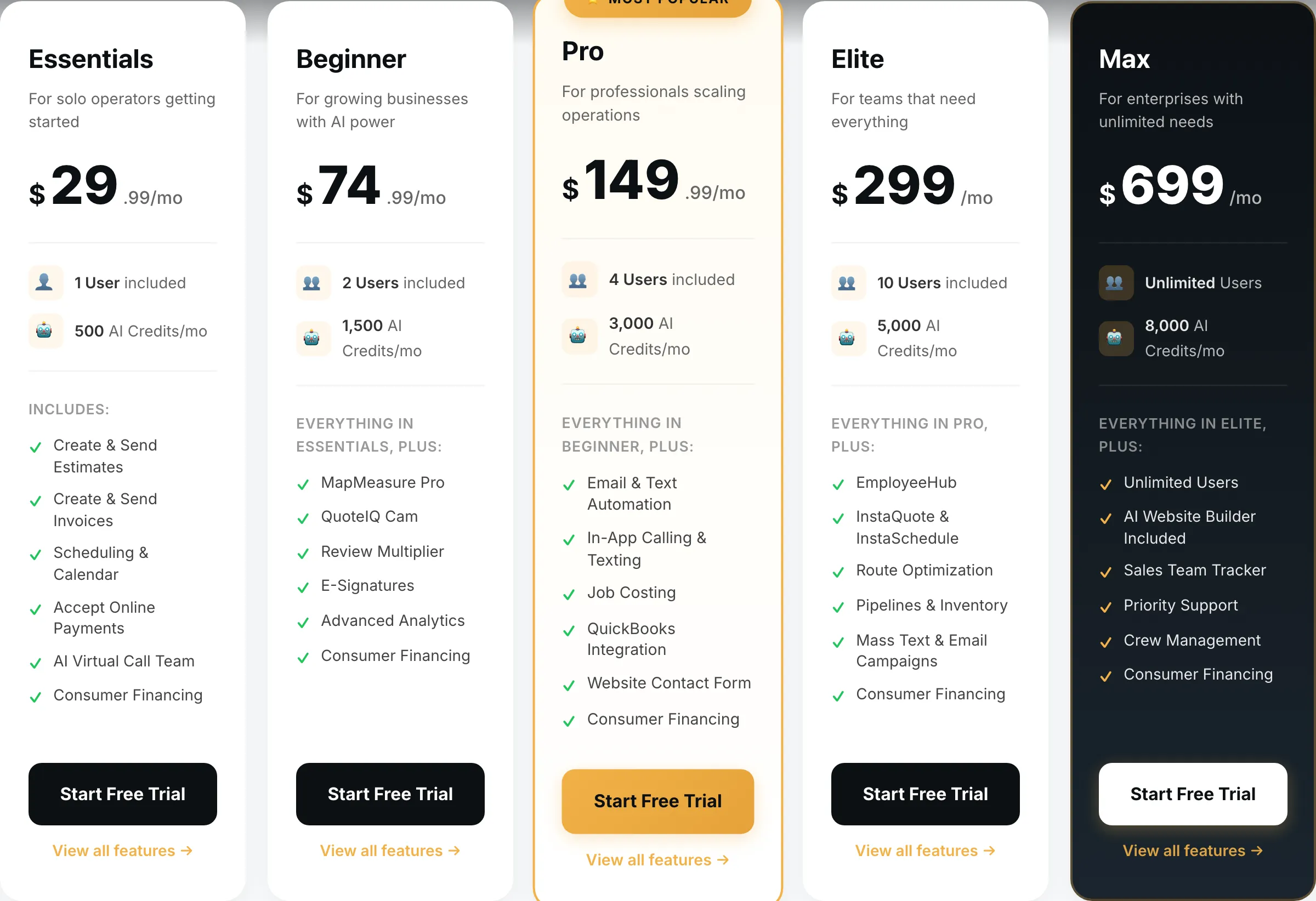
$29.99/mo · Solo handymenField service software built for exterior cleaning and outdoor home service crews, with property measurement baked into the quote.
$29.99/mo, and quoting speed is what it is good at. Saved items, a quote out before you leave, an invoice and a card taken on completion.
Its specialised half — satellite property measurement — is aimed at exterior trades and will not help you. You are buying the general half, which at this price is fine.
What it does well
- Cheapest real entry point of anything in this category — $29.99 gets a working quote-to-invoice loop, not a crippled trial tier.
- MapMeasure Pro measures a property off satellite imagery, which is the actual job on a lawn, driveway or roof quote.
- Every tier includes the features. No add-on menu bolted on at checkout.
What it does badly
- Smaller company than the incumbents. Fewer integrations, and you will occasionally be the person filing the bug.
- Built around exterior and outdoor trades. If you run commercial mechanical, this is the wrong shape.
- Seat counts are tight below Elite — a four-person crew is already on the $149.99 tier.
Who it fits: Solo operator to a four-person crew, mostly exterior cleaning and outdoor work.
Housecall Pro — once others quote for you
$79/mo · Five or moreJobber’s closest competitor, priced for teams rather than solos, with stronger dispatch and marketing tooling.
Essentials at $189/mo includes five seats and a flat-rate price book, which becomes the point as soon as somebody other than you is quoting.
Ignore Basic at $79 for one user — it is poor value against Jobber Core at $49.
What it does well
- Five seats included on Essentials is the best seat-per-dollar deal of the three once you are past two people.
- Dispatch and routing are stronger than Jobber’s at the equivalent tier.
- Recurring service plans on Max are genuinely good if you sell maintenance contracts.
What it does badly
- Worst entry price in the category: $79/mo for a single user, 60% more than Jobber Core for less.
- Extra seats on Essentials are $100/mo — the most expensive seat of any tool here.
- Add-on pricing is not published. You will get those numbers on a sales call, not off the website.
Who it fits: Two to eight people. The seat maths only starts working in your favour once you have a crew.
ServiceTitan is enterprise service software with quote-only pricing and a paid implementation — named for completeness and considerably more than a handyman business needs.
How we picked
Prices read off each vendor’s pricing page on 31 August 2026, no-commitment monthly rate with seats added. We weighted speed from site to sent quote, saved line item libraries and automated follow-ups, because handyman estimating is a volume problem rather than a measurement one.
We earn nothing from Jobber or ServiceTitan, and Jobber is the pick for most readers here.
What we would do
Solo, under five quotes a week: QuoteIQ at $29.99.
Solo to four, quoting constantly: Jobber Connect at $139 for the follow-ups.
Five or more, several people quoting: Housecall Pro Essentials at $189.
Questions operators actually ask
Is handyman estimating software the same as takeoff software?
No, and unlike HVAC or drywall this is not really a takeoff category at all. There are no drawings to measure off on handyman work. Estimating here means producing lots of small quotes quickly and consistently, which is a different problem from measuring a commercial plan set.
How should I estimate handyman jobs?
From a saved library of your common jobs with your own hourly rate behind it, plus a minimum call-out. The mistake is estimating each job from scratch — you do the same twenty jobs repeatedly, so price them once, save them, and quote by selecting.
Should I charge a minimum?
Yes. A one-hour job forty minutes away is a loss once you count the round trip, and taking it blocks a half-day job. Set a minimum, put it in your saved line items so it appears automatically, and hold it.
How do I stop losing quotes I already sent?
Automated follow-ups. Handyman work is high-volume, low-value quoting — you might send fifteen to win six — and most of the ones you lose simply go quiet. A two-message automatic follow-up recovers a meaningful share of those and costs you nothing per quote.
Do I need a flat-rate price book?
Only once someone else is quoting for you. Solo, your saved line items are the price book. With two or three people out estimating, a structured book is what stops the same job being quoted three different ways.