How to bid HVAC jobs

HVAC service bids from a $75 to $200 diagnostic with hourly at $90 to $175. A full system replacement runs $6,000 to $10,000 at base efficiency and $10,000 to $18,000 for high-efficiency or variable-speed equipment.
Two different bidding problems
Service is a price book problem. The same capacitor, the same contactor, the same condensate pump, priced once and quoted consistently by every technician.
Replacement is a sales problem. It is a considered several-thousand-dollar purchase, and how you present it matters more than the number.
They need different approaches and most shops use the same one for both.
Service: build the book
(Typical hours × loaded hourly cost) ÷ target labour % + parts with markup.
Condenser fan motor replacement:
- 1.5 hours × $58 loaded = $87
- Labour at 45%: $87 ÷ 0.45 = $193
- Motor at cost $140 + 35% = $189
- Book price: $382
Set once. Every technician quotes $382. That consistency is worth more than the exact number.
Price a HVAC job
Your numbers, the formula above. Nothing is sent anywhere — this runs in your browser.
$390 base (3 hours × $130)
This is a starting number, not a bid. Walk the property before you send it.
Replacement: do the load calculation first
Most quotes your customer receives will be like-for-like replacements of whatever is already there — which perpetuates whatever sizing mistake was made last time.
A Manual J load calculation takes time and it gives you two things: the right equipment for the house, and a defensible answer when a homeowner asks why you recommended something different from the cheaper quote.
“Your existing system is oversized for this house, which is why some rooms never feel right” is a conversation only one of the three bidders is having.
Present three options
- Base — single-stage, base efficiency, manufacturer base warranty
- Mid — two-stage, better comfort, lower running cost
- High — variable speed, highest efficiency, quietest, longest warranty
With a monthly financing figure beside each.
A homeowner given one number treats it as a price to shop. A homeowner given three treats it as a choice, and makes it with you.
Itemise the install scope
Removal and disposal. New equipment by model. Line set or flush. Whip and disconnect. Condensate drain and safety switch. Thermostat. Pad or brackets. Duct modification. Permit. Commissioning and charge verification.
The cheaper quote you are competing with has omitted two or three of these — usually the duct work and the permit — and the customer cannot tell unless your document lists them.
The mistakes
Bidding replacement like-for-like. No load calculation, no differentiation.
One option. Sends the customer to get two more quotes.
Omitting duct work. The most common scope gap and the most common source of a poorly performing new system.
Free diagnosis. Giving away the skilled part of service work.
No financing figure. Loses jobs that were affordable monthly.
Not selling the maintenance agreement at install. The best moment you will ever have to sell one.
Keeping the shop consistent
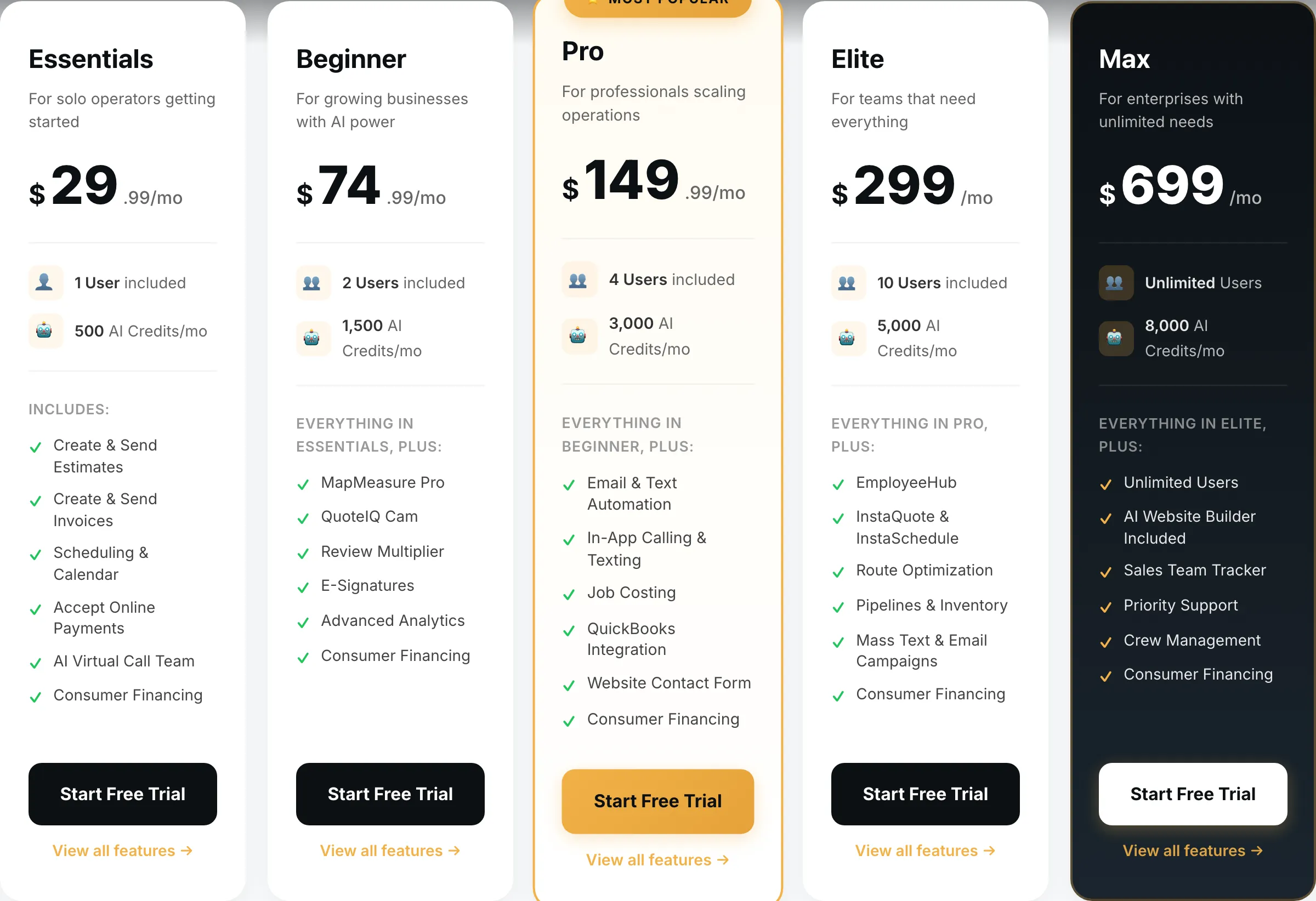
Housecall Pro includes a flat-rate price book from Essentials at $189/mo and a proposal tool on Max at $329/mo for the three-option presentation — the two things this page describes. Jobber at $49/mo plus $29 per seat handles saved line items, with optional line items on Grow at $199. QuoteIQ at $29.99/mo includes consumer financing on every tier.
Questions operators actually ask
How do I bid an HVAC job?
For service, bid from a flat-rate price book built off your loaded hourly cost. For replacement, do a load calculation first, then present two or three system options with the full install scope itemised and a monthly financing figure beside each.
Should I do a load calculation before quoting?
Yes, and most of the quotes you compete against will not have. Replacing like-for-like perpetuates whatever mistake was made last time, and a Manual J gives you a defensible reason your recommendation differs from a cheaper quote.
How many options should an HVAC bid have?
Two or three. Base efficiency, mid, and high-efficiency or variable speed. A customer given one number goes and gets two more quotes; a customer given three options chooses between them, and you are the only company in that decision.
What must be in the install scope?
Removal and disposal of the old system, the new equipment by model, line set, whip and disconnect, condensate handling and safety switch, thermostat, any duct modification, permit, and commissioning with refrigerant charge verification. Duct work is the usual omission.
Should I show financing on the bid?
Yes, as a monthly figure beside each option. A $9,000 system and a $180 a month system are the same purchase and very different decisions, and many homeowners cannot say yes to the first.